The Central London Pathway
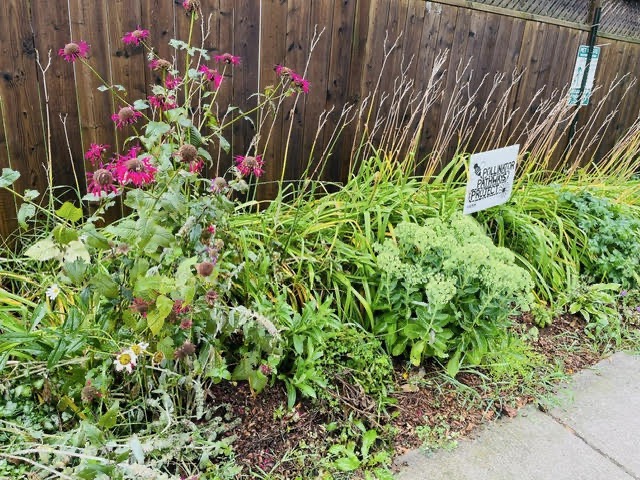
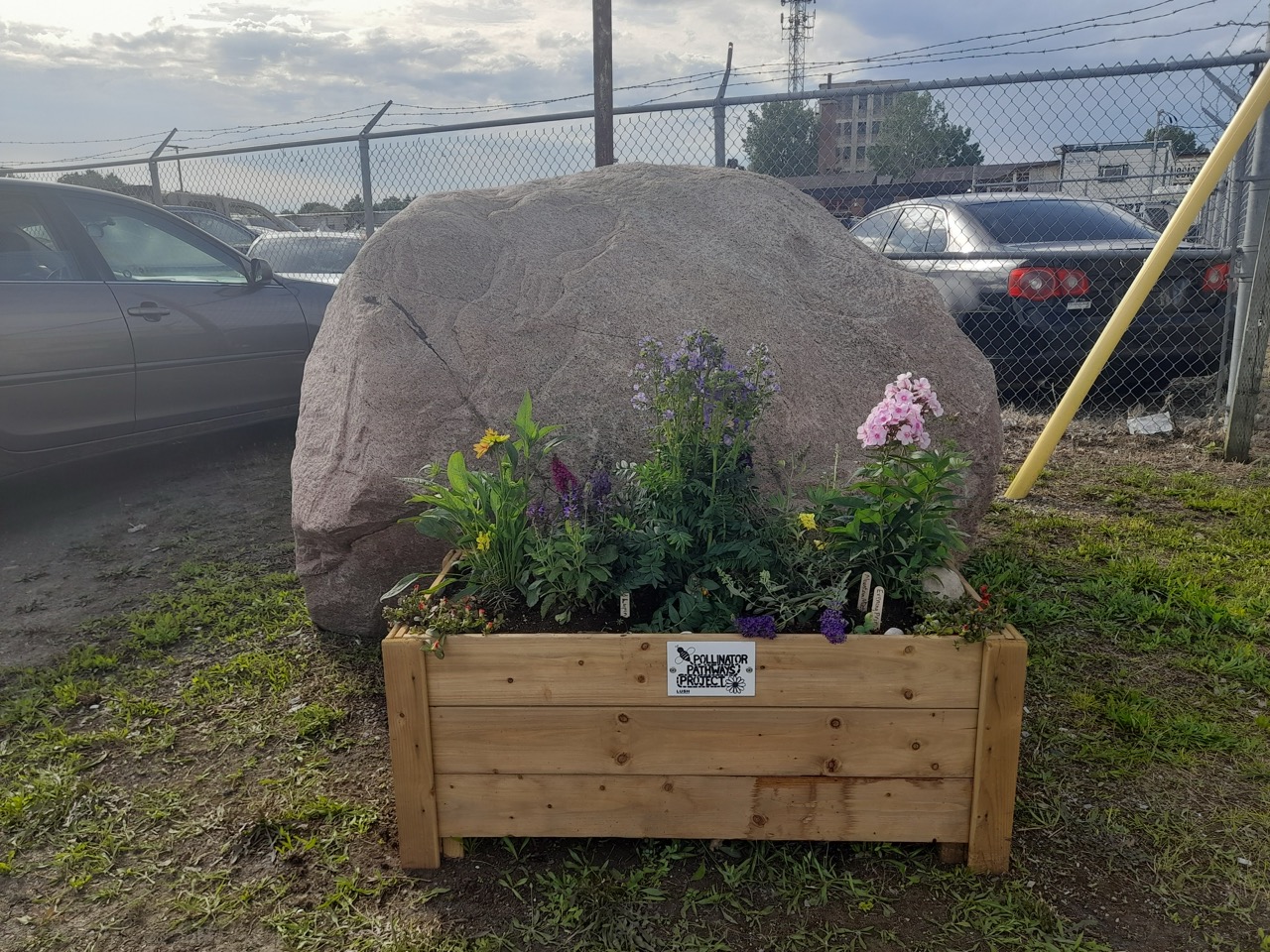
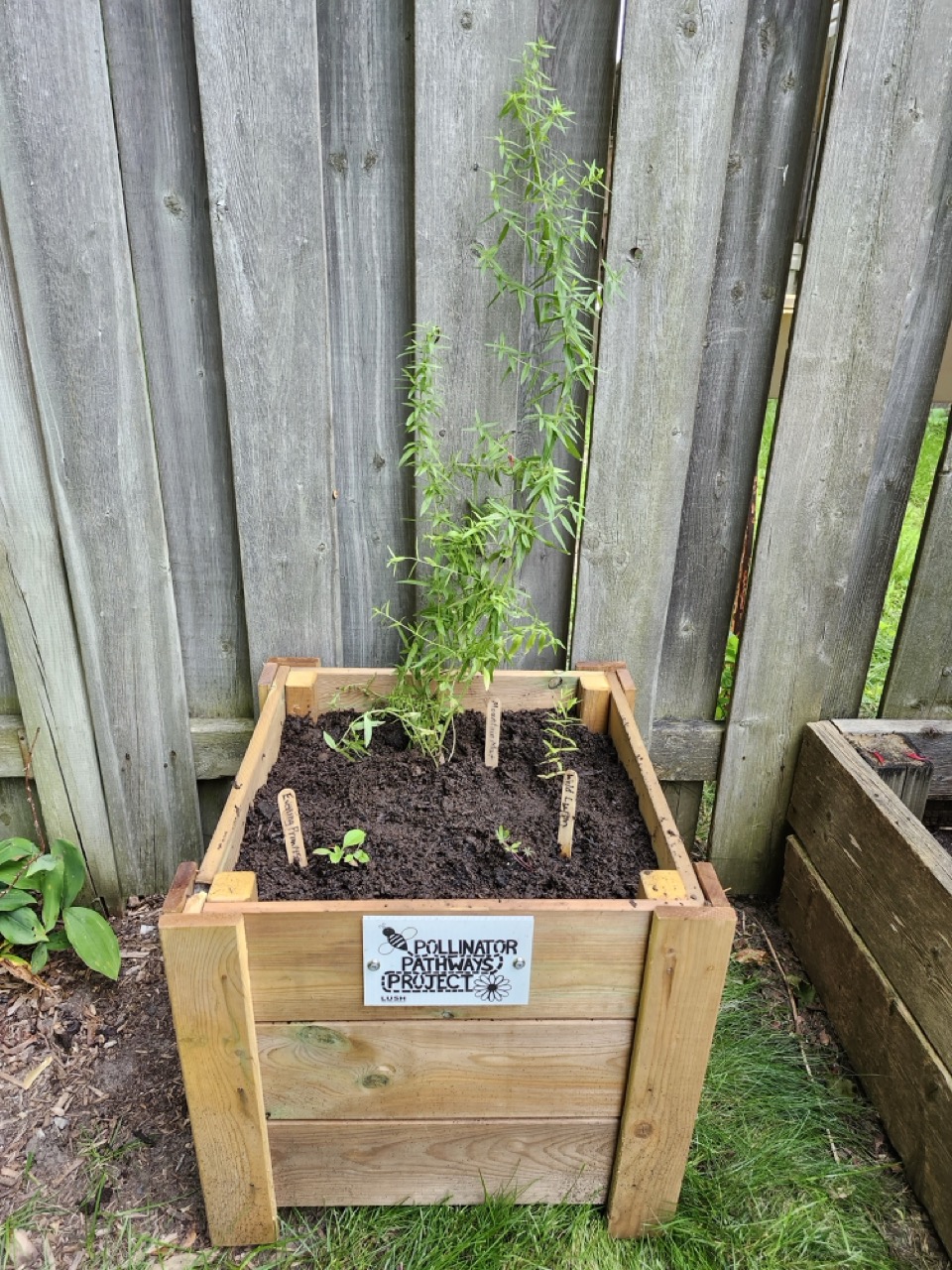
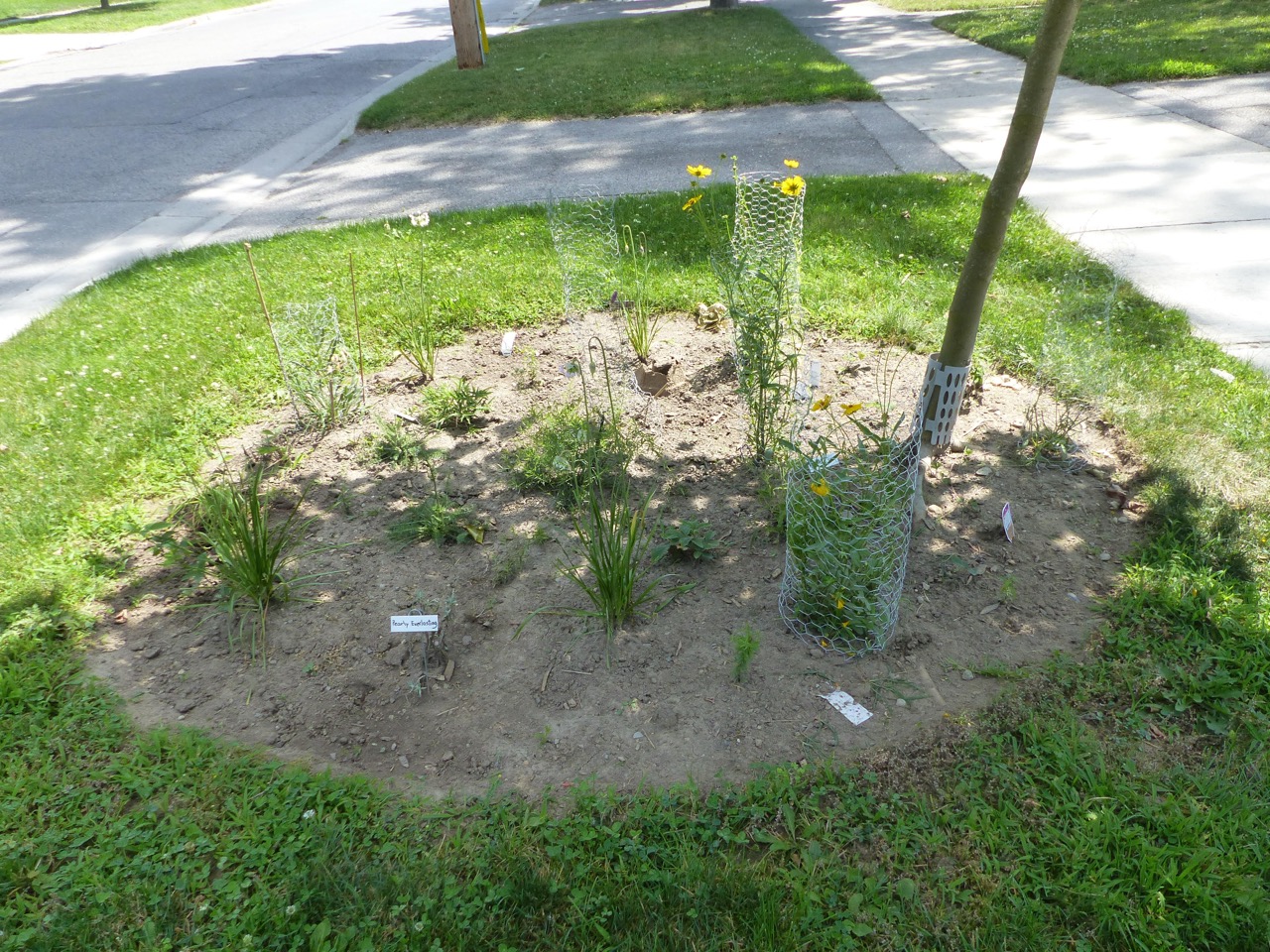
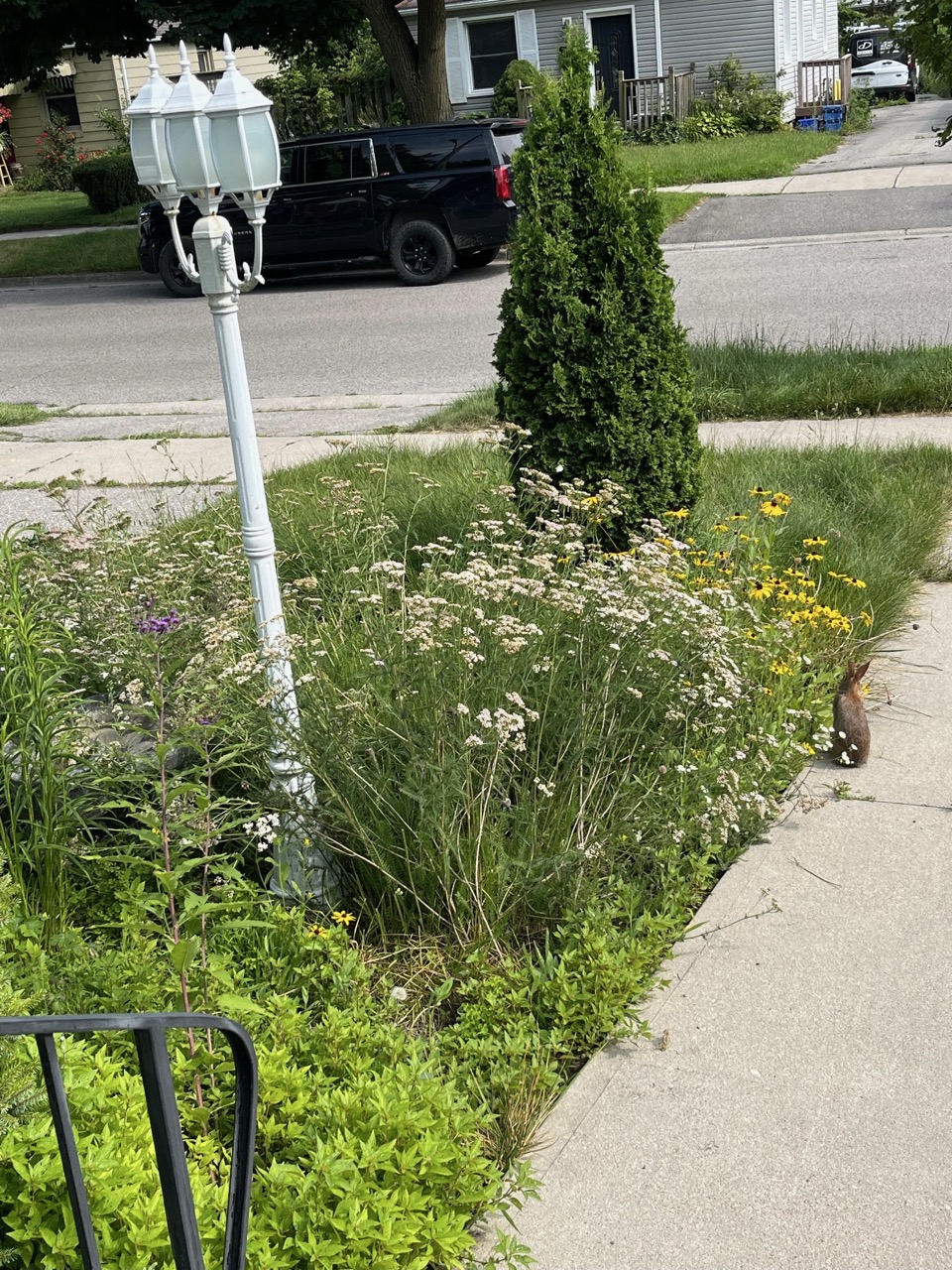
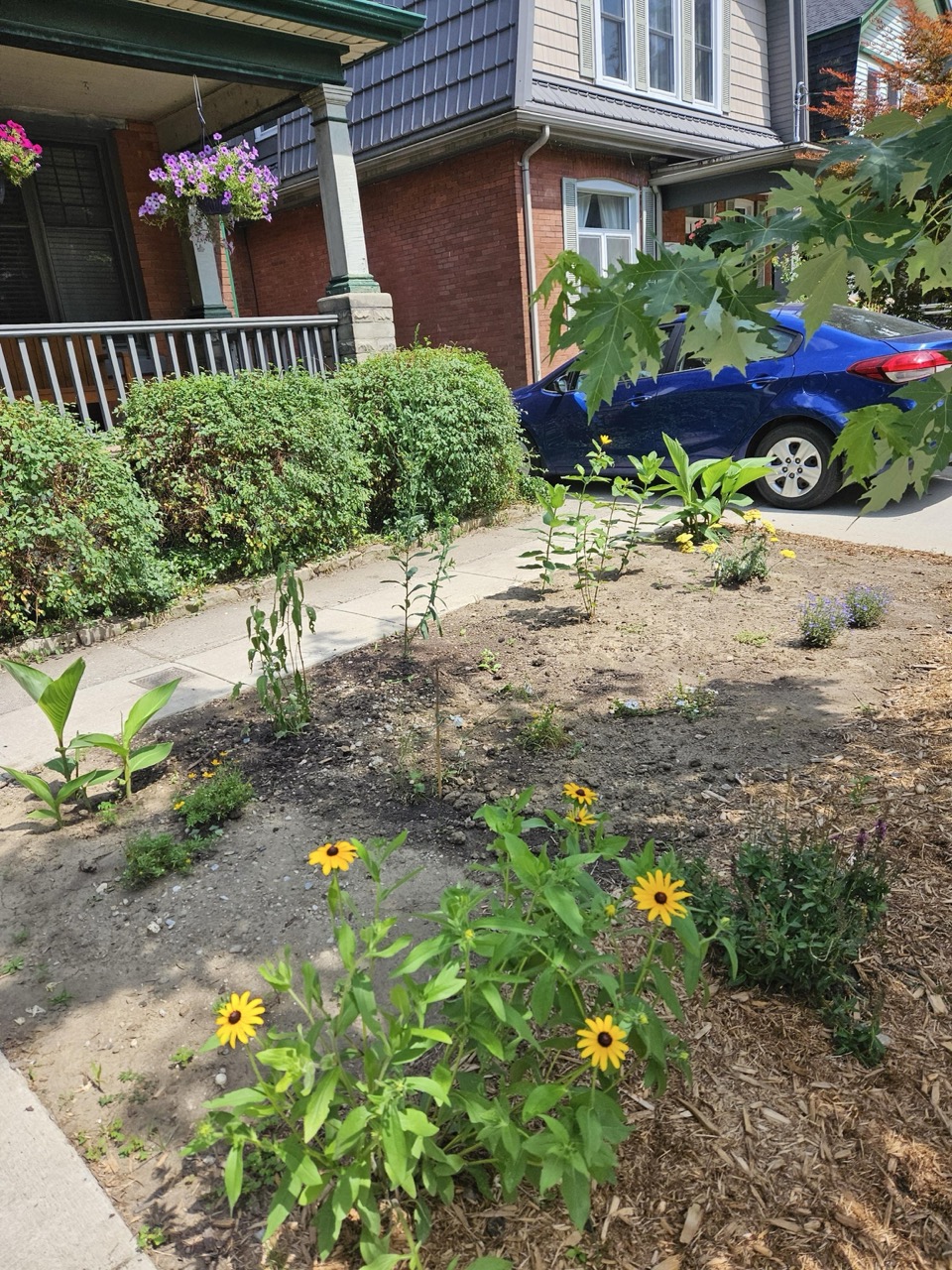
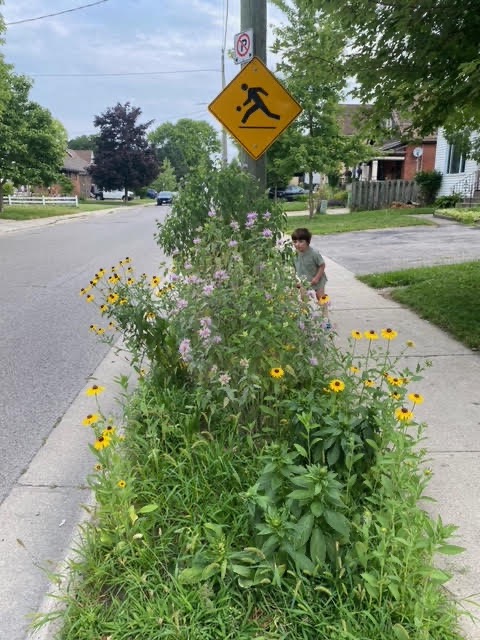
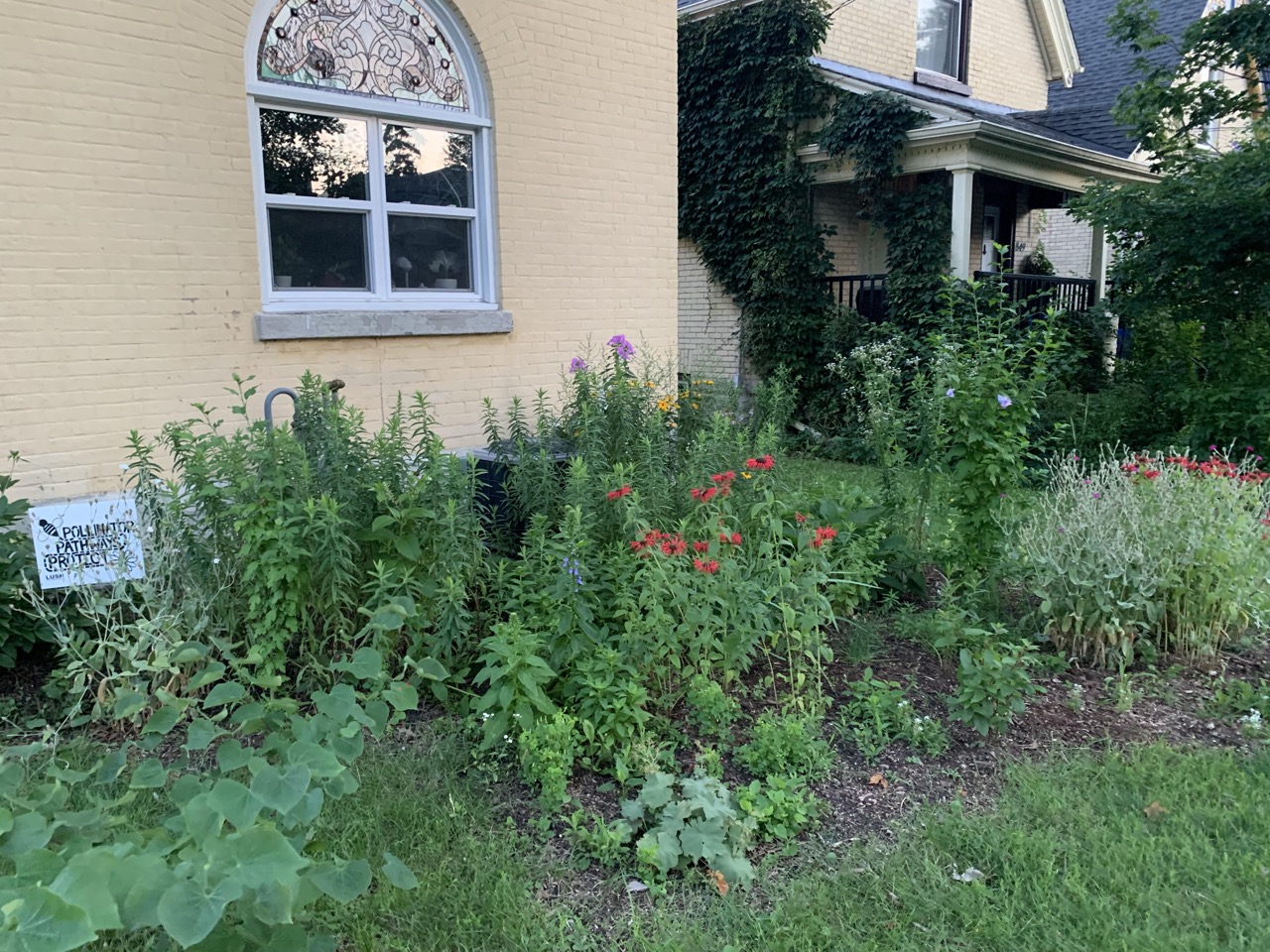
The original goals of the project were modified significantly when we were not able to obtain the total funding needed. The original project’s projected cost was approximately $45,000, but only the Lush Cosmetics funding of $15,000 was obtained. Instead of targeting 8-10 institutional permanent gardens and 250 small planters, we revised the project to target 100 residential permanent gardens and 85 small & medium sized planters.
We also broke the revised project into 3 waves:
- The 1st wave was conducted in the spring of 2023, with 55 residential participants. We had 16 volunteers grow perennial plants from seeds in 12-cell seed starter trays with humidity domes in their homes, with only natural or artificial light (no grow lights were used). Our goal was to grow over 4,000 perennial seedlings. There were fewer than 1,000 seedlings actually grown, so we supplemented these with donations of perennial and annual plants (a donation in kind from Rebecca McDuff at Parkway Gardens) to get the 1,800 plants needed for the 55 pollinator gardens.
- The 2nd wave was conducted in the fall/23 with 41 residential participants. We had 9 volunteers sow 2,300 seeds (mostly in seed cubes). Since the gardens would not have any plants growing when they were sown in the fall, we supplemented the seeds with 996 annual plants , a donation in kind by Elizabeth Warner.
- The 3rd wave was conducted in the spring/24 with 53 residential participants. We had 7 volunteers grow perennial plants from seeds in 72-cell seed starting trays in mini green houses with grow lights starting in April/24, and 2 volunteers grow perennial plants from seeds in 12-cell seed starter trays with humidity domes over winter (outside) starting in December/23.
Our goal was to grow 6,000 seedlings, 3750 from the spring mini greenhouse seedlings and 2250 from the overwinter seedlings. We actually grew 2200 seedlings, 1050 from the spring seedlings (a success rate of just under 30%) and 1150 from the overwinter seedlings (a success rate of just over 50%).
We had 5 major goals and 5 minor goals for the project.
Major Goals
- Permanent Pollinator Gardens - Our original goal was to establish 8-10 permanent gardens at strategic locations along the Dundas Street corridor. We were unsuccessful in obtaining the involvement of large institutions such as schools, churches and municipal buildings. Their major concern was providing funding & staffing for ongoing maintenance of the gardens. To compensate for the lack of success in this area, we switched our focus to residences in the target area, and created a new goal for this group, namely to establish 80 – 100 permanent gardens at residences along the Dundas Street corridor. We were able to enlist the involvement of the 13 community organization that comprise the Central London area to communicate the project to residents and small businesses. This resulted in 100 permanent gardens being installed, meeting our revised goal.
- Planters in residential areas - Our original goal was to deliver 250 small (18”x18”) planters, complete with soil and 2 perennial plants, to residences in Central London. Our revised goal was 85 planters, but we offered both small (18”x18”) and medium (18”x36”) size planters, rather than just the small planters originally visioned, providing homeowners and small businesses greater choice. We provided 69 planters in total, 51 medium sized planters and 18 small planters, 19% short of our goal
- Plants for permanent gardens – Our original goal was to provide 1200 plants for the 8-10 permanent gardens. When we changed to focus from institutional to residential permanent gardens, we increased the goal to 4,000 plants, and actually planted 4,901 plants. We vastly exceeded the number pollinator friendly plants than our original goal - over 400% more plants. This is the greatest benefit coming from the project, with 4 times more plants for our pollinators to visit.
- Plants for planters – Our original goal was to have 500 plants for the 250 small planters. Our revised goal was to have 175 plants for the targeted 85 planters. We provided 385 plants, 50 to the 18 small planters and 315 plants to the 51 medium sized planters. The medium sized planters allowed us to put in more plants.
- Area covered by plants – Our original goal was to have 70m2 of ground covered by permanent and planter gardens. Shifting our focus to many residential gardens versus a few institutional gardens vastly increased the area that could be planted, and we increased our goal to 500m2. We actually planted 764m2, happily surprised with the willingness of homeowners to offer more of their grassed areas to be converted to pollinators gardens. We hoped for an average garden size of 5m2, but achieved over 7.6m2
Minor Goals
- Volunteers – Our original goal was to get 55 volunteers to help in the preparation & planting of the 8-10 institutional permanent gardens, and in building the 250 small planters. Our revised goal remained the same. We actually had 57 volunteers, slightly exceeding our goal helping implement the 3 waves of the project, as follows:
- 1st Wave Growers – 16
- 1st Wave Planting Captains – 8
- 1st Wave Builders – 2
- 2nd Wave Planting Captains – 9
- 2nd Wave Builders – 2
- 3rd Wave Growers – 9
- 3rd Wave Planting Captains – 9
- Website Visits – Our original goal was 5,000 visits, mainly to discover the story behind each of the 8-10 institutional permanent gardens, and obtain more information on the plants in the garden. With the shift in focus to residential permanent gardens and planters, we revised our goal to 3,000 website visits. Over the 18 months of the project (Jan/23 to Jul/24), we had 3588 website visits, exceeding our revised goal by 20%.
- Length of pathway – Our original goal was 20 km, which would have been calculated as the distance of a path along the 8-10 institutional permanent gardens. With a revised goal of 185 residential permanent gardens and planters, we determined that it would take too long to try to calculate the distance along this new path of 169 sites.
- Signage design contestants – Our original goal was to have a contest for the design of signage for each of the 8-10 institutional permanent gardens. Since we were unable to get any institutions to participate, we changed our focus to residential permanent gardens and planters. We decided to use our existing Pollinator Pathways Project sign design, with the addition of the Lush logo, instead. So there was no need for a signage contest
- High School student volunteers – Our original goal was to get several high schools to participate in the project (part of the 8-10 institutional permanent gardens), with 50 student volunteers participating. We had already installed permanent gardens at 2 high schools, and planned to enlist several more from the target area. However, these other high schools did not agree to participate, and we revised our goal to zero high school student volunteers


 Email us